Anbieter einloggen
Home
NEWSLETTER
Registrieren Sie sich für unseren monatlichen Newsletter.
Ihre Adresse wird nicht an Dritte weitergegeben.
Zu unseren Datenschutz-Bestimmungen.
EVENT
01.12.2026 – 02.12.2026
Teilen:
Art:KurzkursDauer:2 TageBeginn:01.12.2026Ende:02.12.2026Ort:Chatham Maritime, Kent, UKEintritt:kostenpflichtig
Mehr Informationen

Pneumatic Conveying System Design

Kurzkurs

Advanced Course: Pneumatic Conveying System Design

An in-depth exploration of detailed calculations and design for pneumatic pipelines.

This course is aimed at practitioners already familiar with the basics of pneumatic conveying.
Course fees are £915, discounted for returning delegates from other courses, and 2 or more registrations from one company

This is also available as an In-Company course.

This course is delivered in English.
Pneumatic Conveying System Design 01.12.2026 02.12.2026 Chatham Maritime, Kent, UK

Zugeordnete Events

Kurze Kurs Dust Control for Processes
Overview: An exploration of the different methods for dust prevention, capture and extraction. Subjects covered: * Characterisation of bulk particulates - covering bulk behaviour, particle size distribution, bulk density, the need for characterisation, key materials characteristics. * Materials handling - covering vessel geometry and type, feeders and flow problems. * Dust control - covering prevention and contamination, extraction, capture (filters) and venting. * Guidance on dust control Course fee: £375 per delegate [**NOTE**Auf Deutsch**Der Kurs wird online auf Englisch abgehalten. Wenn Sie daran interessiert sind, diesen Kurs auf Deutsch zu erhalten, nehmen Sie bitte Kontakt mit uns auf, um dies zu vereinbaren.**]
14.06.2023 | Kurze Kurs | 1 Tag | on-line | Eintritt: kostenpflichtig
PASSED
Kurs Rotary Valves: Design, Selection and Operational Issues
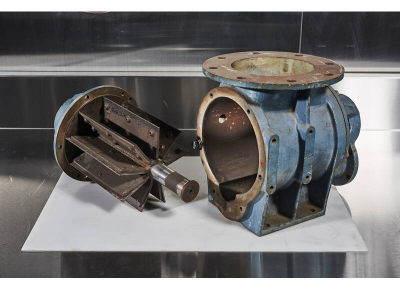
Rotary valves are widely used to feed pneumatic conveying pipelines, and for feed metering, explosion isolation, atmospheric isolation etc. However there are a multitude of combinations of different feature options available covering choice of materials of construction, rotor type, drive type, venting arrangements, bearing pattern, seal choice, clearances, cleaning features etc. Faced with this bewildering choice, how does an engineer decide what to specify? This course will help understand the reasons for the different options and how to choose them. Topics will include: * Application areas for rotary valves, and their different demands (feeding, explosion protection, isolation etc) * Basics of rotary valve performance – air leakage, feed rate etc * Materials of construction linked to issues of wear and build-up * Seals and bearings, options, functions and selection * Special consideration for explosion isolation * ATEX requirements and responsibilities * Features for cleaning and preventing contamination * Venting – needs, options and ensuring success * Review of practical application issues The course is aimed at engineers, system designers, maintenance personnel who have responsibility for sourcing, specifying and keeping operational rotary valves in all industries. Course fees are £580 per person

24.02.2026 | Kurs | 1 Tag | Chatham Maritime, Kent, UK | Eintritt: kostenpflichtig
PASSED
Kurs Pneumatic Conveying of Bulk Solids
Overview: This intensive course looks at system components, design techniques, operation and control of blow tank systems, explosion hazards and operational problems, as well as the important but often neglected area of interfacing storage bins with conveying systems. Subjects covered: * Techniques for reducing product degradation during conveying * Ways to reduce maintenance, repair and unplanned stoppages to pneumatic conveying equipment * Methods of reducing energy consumption * How to troubleshoot problematic systems * How to eliminate blockages in pneumatic pipelines * Explosion Hazards including ATEX Directives * Operation and control of blow tanks * System selection and operation * Interfacing storage bins to conveying systems * Relevant case studies from industry Course fee: from £915. Discounted are offered for returning delegates and 2 or more registrations from one company. This course is delivered in English. [**NOTE**Auf Deutsch**Der Kurs wird online auf Englisch abgehalten. Wenn Sie daran interessiert sind, diesen Kurs auf Deutsch zu erhalten, nehmen Sie bitte Kontakt mit uns auf, um dies zu vereinbaren.**]
17.11.2026 – 18.11.2026 | Kurs | 2 Tage | Nether Langwith, Notts | Eintritt: kostenpflichtig
Kurs Troubleshooting and Commissioning Pneumatic Conveying System
Overview: Delegates will look at the setting up and commissioning of pneumatic conveying systems. This course is a ’Hands on’ fully practical session using the pneumatic conveying lines and rotary valves in the on-site laboratories in Chatham. Subjects covered: * The practical challenge of starting up systems on site and making sure they work as the designer intended; * Understand the key signals to look out for that tell you how the system is operating; * Avoiding pitfalls that can lead to slow start up, blockages etc; * How to know when the system is operating as intended; * Ensuring the system is optimised around the users priority requirements eg. minimum energy usage/ particle blockage / system wear; * It also covers lean and dense phase, rotary valves, blow tanks and various air supply types Course fee: £915 per delegate Venue: Chatham, Kent Contact: Caroline Chapman
23.02.2027 – 24.02.2027 | Kurs | 2 Tage | Chatham, UK | Eintritt: kostenpflichtig

Firmeninformation

Zugeordnete Beiträge

2-day in-depth course: Pneumatic Conveying System Design 2 day in-depth short course for Engineers involved in the design or troubleshooting of pneumatic conveying systems
2-day in-depth course: Pneumatic Conveying System Design
2 day in-depth short course for Engineers involved in the design or troubleshooting of pneumatic conveying systems If you are tasked with designing Pneumatic Conveying systems, this course is designed for you. An advanced in-depth exploration of detailed calculations for design of pneumatic pipelines and specifying plant. The course will cover: * Lean versus dense phase – relative advantages in practical application, and applicability to different materials; * A detailed look at obtaining conveying information for the material to be handled, and how to scale this up for pipeline design; * Different equations for predicting pipeline pressure drop and throughput; * Stepped bore pipelines – how they enhance system performance and reduce problems, and how to design them; * Differences in powder behaviour; * A detailed look at bends; radius, pressure drop, wear, particle damage and material build-up; * Air humidity effects – psychrometry and moisture calculations, and controlling interaction or airborne moisture with the powder; * Practical details – choice…
16.04.2026  |  1428  |  Produktnews  | 
Weiterlesen
Handhabung von Schüttgütern: Warum ist das so wichtig? Die Prozesstechnik hat sich in den letzten Jahrzehnten enorm weiterentwickelt. Doch Fließprobleme bestehen weiterhin. Dieser Artikel erörtert einige der häufigsten Ursachen. Von R.J. Farnish
Handhabung von Schüttgütern: Warum ist das so wichtig?
Die Prozesstechnik hat sich in den letzten Jahrzehnten enorm weiterentwickelt. Doch Fließprobleme bestehen weiterhin. Dieser Artikel erörtert einige der häufigsten Ursachen. Von R.J. Farnish Die Förderung und Lagerung von Schüttgütern innerhalb von Prozessen ist seit der industriellen Revolution im 18. Jahrhundert eine grundlegende Aufgabe für viele Anlagen. Die Prozesstechnologien haben sich in der Zwischenzeit bis heute in ihrer Komplexität und Effizienz enorm weiterentwickelt. Wäre es möglich, einen Ingenieur aus den Anfängen der Industrialisierung in die heutige Zeit zu versetzen, würde er angesichts der enormen Vielfalt an Prozessanlagen, die auf spezifische Anforderungen und Endprodukte zugeschnitten sind, seinen Augen kaum trauen. Was er jedoch mit Sicherheit wiedererkennen würde, sind schlecht funktionierende Silos, Bunker und Trichter, die nicht selten unsanft von den Anlagenbedienern bearbeitet werden. Dieser Artikel behandelt einige der häufigsten Ursachen für Verarbeitungs- und Fließprobleme, die über die Jahrzehnte hinweg bestehen geblieben sind. Grundlagen Die Austragsprobleme bei der Handhabung von Schüttgütern mit weniger…
05.03.2021  |  3231  |  Fachbeitrag  | 
Weiterlesen
PORTALS
Schuettgut-Portal BulkSolids-Portal Recycling-Portal
Related
Bulkgids.nl
ERHALTEN SIE UNSEREN NEWSLETTER
Newsletter Archiv
Service und Kontakt
Impressum, KontaktDisclaimerDatenschutzerklärungWerbungIhr Eintrag
Folgen Sie uns
Linked