| |
Motor Systems in Medical Technology
In Europe at least 50,000 patients a year die from infections which they acquire in hospital. Due to this alarming number, at the beginning of 2008 the German Association for Hospital Hygiene (DGKH) highlighted the dangers of this increasingly sore subject: Antibiotic resistant bacteria are on the rise in hospitals. Surgical tools are also covered in the demand for heightened hygiene in operating theatres.
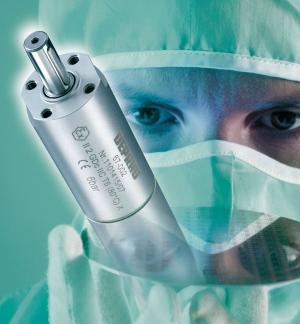
Medical power tools, such as drills, saws or milling machines are needed today in many surgical procedures and orthopaedic operations. Drills and screwdrivers are for example, used to fix broken bones with a plate during an osteosynthesis procedure and in the field of prosthetics, bone surfaces are cleaned for an optimal bone cement interface using a practical lavage system.
After any operation the tool must be thoroughly cleaned and sterilised. Therefore steam sterilisation is the most common method of destroying microorganisms in hospitals and clinical practices.
Surgical tools are powered by a wide variety of motors. Electrical motors, both battery driven and with cable, compete with pneumatic drive systems. However, not every type of drive is suitable for steam sterilisation. The product to be sterilised must be treated with pure saturated steam at a temperature of up to 134 degrees Celsius which interacts with all surfaces of the pre-cleaned instrument.
|